
Finding Belmont Residents
No single open roster covers every household in Belmont. So start with the question. An owner or parcel question begins with the assessor. A recorded-title question belongs at Middlesex South. Registration questions run through a state form or a Town Clerk request. A former address usually takes several dated records together. Try a deed or tax record first. Then a resident list or directory, and a newspaper, census, or obituary source to test the match. A bare name is weak evidence. Initials, married names, trusts, and similar surnames appear across different records.
Note the date of each search and compare independent details. The assessor separates a parcel location from the owner mailing address. A deed names recorded parties, not everyone living at a property. A historical directory can list an occupant, boarder, occupation, or business address. Those are different claims. That distinction matters. It is what makes a Belmont residents directory more useful than a string of unverified matches.
- Decide whether the question concerns a current tax-record owner, an individual voter status, a recorded deed party, or a historical resident.
- Search the Belmont assessor record by owner, address, or parcel when an address or ownership link is available.
- Use the Massachusetts voter form only for the individual voter and only with the required birth-date and ZIP details.
- Follow a book and page, party name, or legal description into the Middlesex South deed index for the title trail.
- Use resident lists and library collections for earlier years, then make a narrowly described public-record request or counter visit when the online path ends.
- Roll
- An organized list maintained for a defined purpose, such as an assessment or voter list.
- Index
- A searchable pointer to a record, often showing names, dates, and document references rather than every fact in the file.
- Parcel
- A taxable piece of real property identified by the assessor and tied to a situs, or physical location, address.
- Criss-cross directory
- A reverse directory that begins with a street and number, then points to an occupant entry.
Belmont Records Offices
Custody of Belmont records is split among town, registry, court, and library keepers. The Town Clerk holds local vital records, elections, the annual census and residency material, and municipal filings. The office also carries the town public-records function. Belmont Assessors maintain the tax-record parcel data. The Registry records instruments affecting title. Probate, family, superior, district, land, and federal matters each follow their own court custody rules. The records offices listed here are the main starting points. No single county office keeps every Belmont record.
For street-by-street parcel work, address records and the assessment-report workflow live in the Belmont street directory. Older directory collections appear separately in the city directory.
Belmont Parcel Record Search
The Belmont Vision database is the current assessment snapshot. It links an owner, address, or parcel search to location, owner or co-owner, mailing address, account and MBLU identifiers, assessed and market values, sale information, book and page, building details, land use, zone, neighborhood, lot size, and a sketch. The card is strongest for tax-record ownership and the parcel trail. It does not establish every person at a location. The town also warns that a sketch can be wrong. An owner mailing address may sit outside Belmont while the parcel itself stays in town.
| Vision route | Useful input | Evidence returned | Best use |
|---|---|---|---|
| Owner search | Owner name | Tax-record owner and parcel card | Start a property-linked Belmont resident search |
| Address search | Street address | Situs, MBLU, account, and parcel details | Confirm the specific property |
| Parcel navigation | Parcel or MBLU reference | Assessment and property fields | Separate similar street names or units |
| Deed reference | Book and page on the card | Link to the recorded instrument trail | Move to the Registry search |
The Belmont Vision assessor search opens the starting screen for those parcel records.
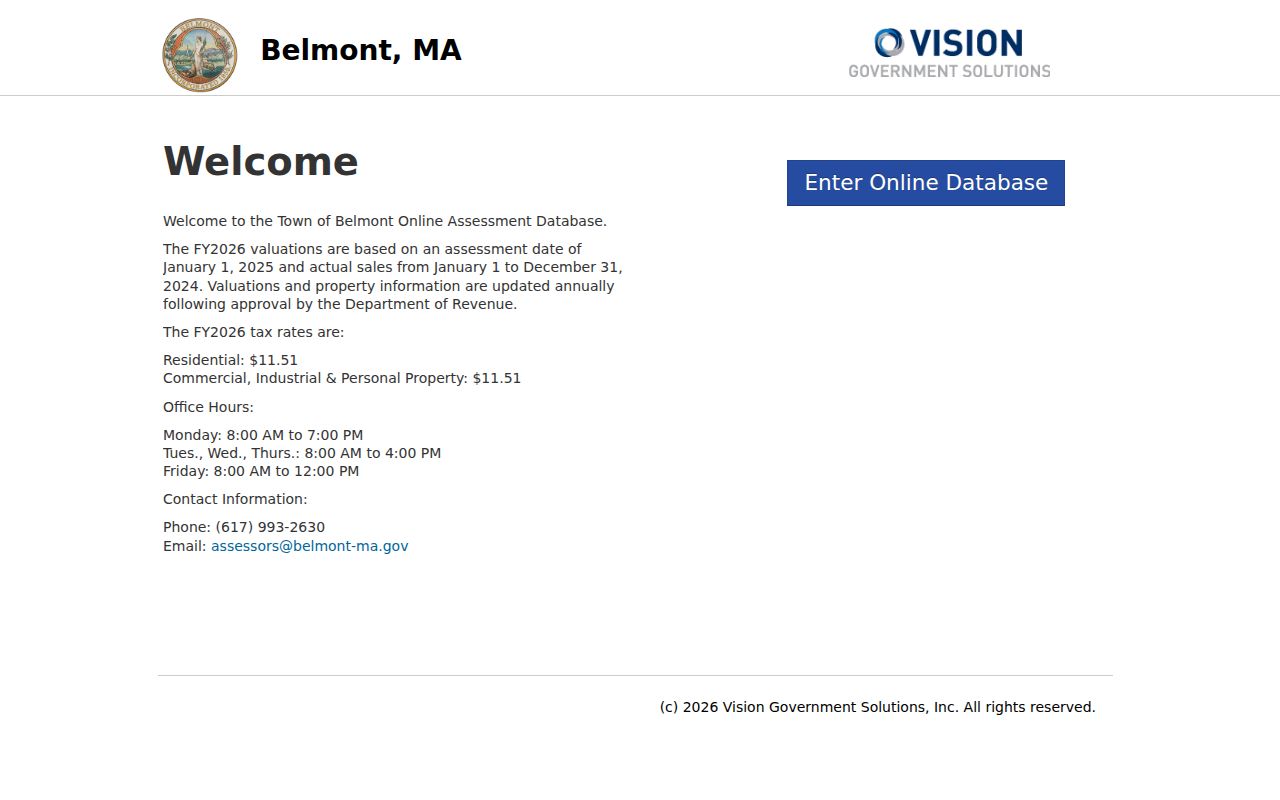
Treat an assessment result as a dated tax record. Follow its book and page into the Registry before drawing any title conclusion.
Note: Belmont’s official assessment reports are address-sorted PDFs for FY2011 through FY2025, which can help when an interactive result is difficult to locate.
Belmont Voter Lookup Rules
Massachusetts offers an individual voter-status check, not a public browse tool for every Belmont name. The form requires first name, last name, birth month, day, year, residential ZIP, and agreement to the stated purpose. A matching result confirms registration information for that individual. It builds no street list. Nor should it be used to infer who else lives nearby. For an existing local voter list, the Belmont Town Clerk is the proper request route, subject to state voter-file rules and production costs.
| Form field | Format | Required |
|---|---|---|
| First and last name | Text | Yes |
| Birth month, day, and year | Dropdowns | Yes |
| Residential ZIP | Five digits | Yes |
| Agreement | Checkbox | Yes |
A local list can hold public fields. These include name, residence address, party, birth date, status, voter ID, registration date, participation, and previous changes. Phone, email, veteran status, permanent-absentee status, confidential-voter information, and protected minor information stay withheld. Belmont reported 18,218 registered voters at the end of 2023. It also reported 36.45 percent turnout in that year's annual election, useful scale but no substitute for a current list.
The official Massachusetts voter registration search presents the required individual fields.
Record the date of any voter check. Address-confirmation mail, annual census nonresponse, and later updates can all change the status shown.
Current Belmont Resident Directories
Current sources answer narrow questions rather than one broad question about everyone in town. The assessor holds the tax-owner view. The Registry holds recorded parties. The voter system handles individual status and local-list requests. The Town Clerk's resident-list process sits apart from the state form. The municipal staff directory is a public work-contact resource, not a resident list. Read the access column as closely as the source name.
| Belmont source | What it can show | Custodian | Access path |
|---|---|---|---|
| Vision parcel card | Tax-record owner, situs, mailing address, and property context | Belmont Assessors | Free public web search |
| Voter status or local list | Individual status, or lawful public local-list fields | State elections / Town Clerk | Individual form or local request |
| Recorded-land index | Deed, mortgage, lien, and plan parties | Middlesex South Registry | Free online index and images |
| Resident-list books | Current or prior municipal list when available | Belmont Town Clerk | Purchase or public-record request |
| Town staff directory | Municipal department and staff contacts | Town of Belmont | Municipal directory |
| Official record | Commercial people finder |
|---|---|
| Has a defined keeper, date, and record purpose. | May combine sources with different update schedules and match rules. |
| Supports a limited claim, such as a recorded party or tax-record owner. | Can contain stale addresses, duplicate identities, or unclear source dates. |
| Offers a custodian, clerk, or librarian route for clarification. | Should be cross-checked against the responsible public custodian. |
Current resident-list books cost $25 through June 30, with prior years at $10 when available. An up-to-date list comes free through a Public Records Request. These lists stay distinct from an assessor record or a voter-status result.
Belmont Court Record Checks
Court events tied to Belmont live in a few different departments. Cambridge District Court, Middlesex Superior Court, Middlesex Probate and Family Court South-Woburn, other applicable state departments, and the Land Court all handle matters that touch town residents. Some sit outside the county. The statewide MassCourts portal covers them. Pick a department, division, and location first. Then search through the Name, Case Type, Case Number, or Ticket/Citation tabs. Match the tab to the question at hand.
A name hit alone proves little. Match it with the court, a date, an address, or a case status. Then connect the docket to the right person.
Remember that online case information is not the official court file. A terminal at the courthouse may display more than the web entry does. The clerk or registry holds the actual file along with any route to a certified copy. Access limits apply to juvenile, sealed, impounded, adoption, and expunged material. Probate dockets can be a strong thread for an estate or heir question. Public portions may name a fiduciary or interested party. Confidential attachments and account details stay protected. The MassCourts public case search is the statewide entry point for any Belmont case lookup.
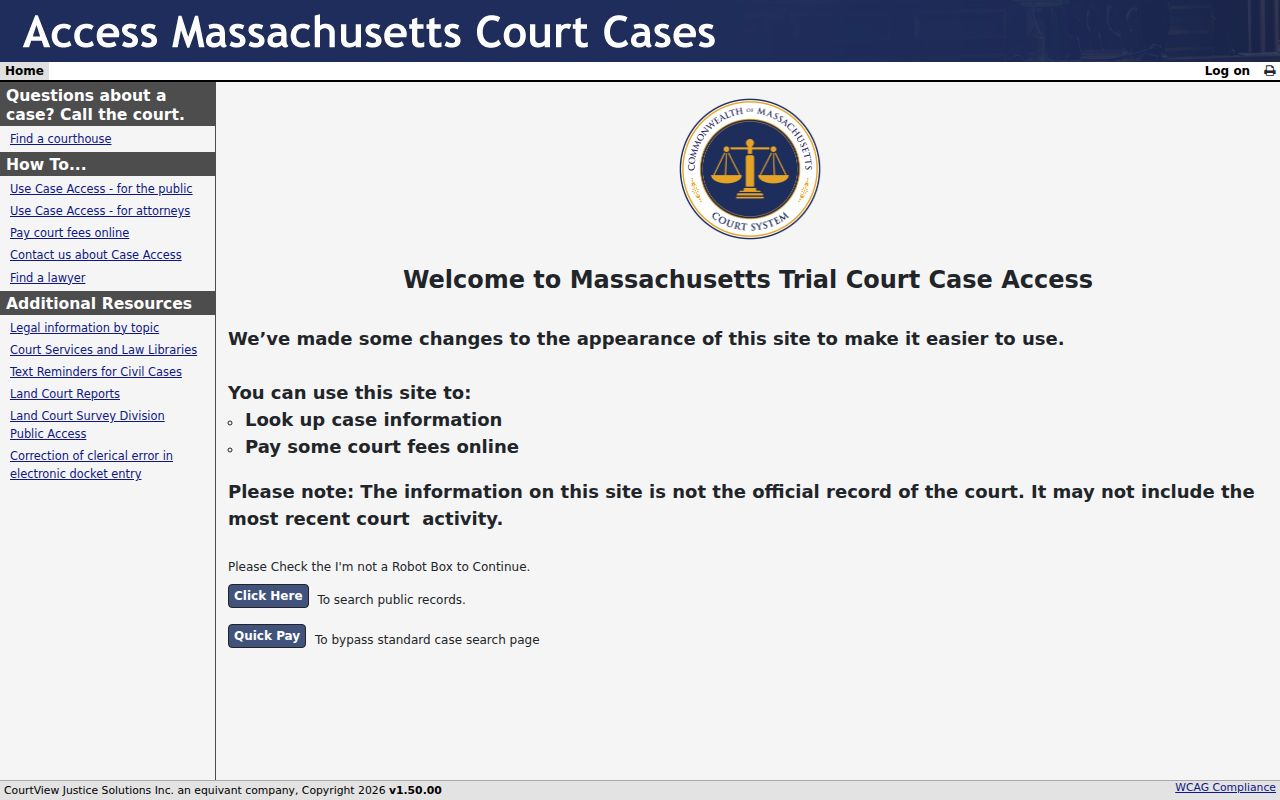
Treat a public docket result as a lead, not a finding. The right clerk or register verifies it before anyone relies on the record for identity.
Belmont Vital Record Access
Belmont vital records follow the event, not just the person. Births connect to a Belmont birth or a parent living in town. Marriages rest on an intention filed locally. Deaths rest on a death in Belmont or a resident dying elsewhere in Massachusetts. Records go back to 1859. A certified copy costs $20. The request form wants the name, the date if known, the quantity, and contact details. Submit it in writing, by mail, or through the dropbox with a self-addressed stamped envelope. Confirm timing with the Town Clerk before depending on it.
Older research points to the Massachusetts Archives. Its index spans births, marriages, and deaths from 1841 through 1910 with volume and page citations. M.G.L. c.46 §2A opens birth and marriage records after 90 years. It opens death records after 50 years. Open access does not put every image online. Recent and restricted certificates still carry eligibility, identity, relationship, adoption, and confidentiality rules. Divorces are court files. The Town Clerk issues no vital certificate for them. For statewide eligibility and order channels, the vital-record ordering guidance from the state explains the paths.
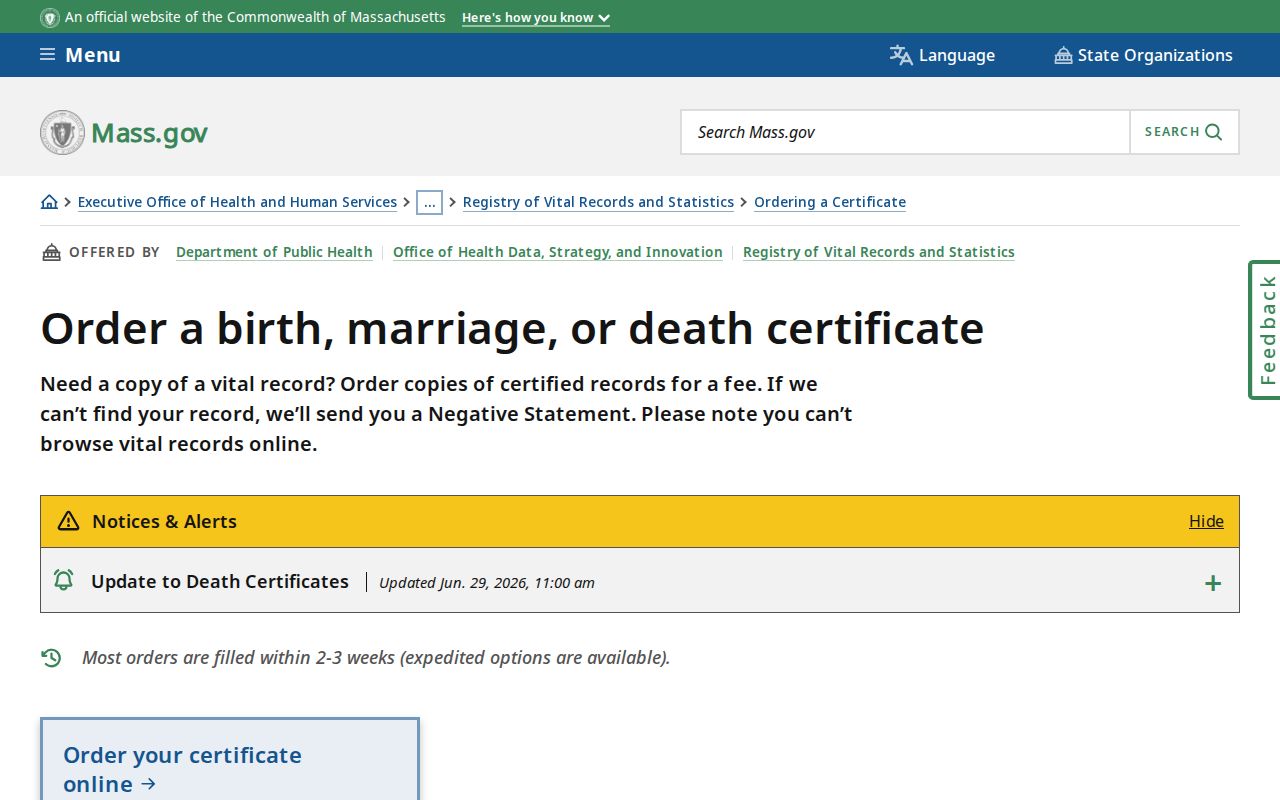
For historical work, start with an Archives index citation. Then contact the custodian holding the actual certificate or original record.
Note: RVRS generally holds statewide copies from 1936 forward, while older material follows the local and Archives custody split.
Belmont Library Resident Sources
The Underwood Local History Room at Belmont Public Library holds what current official systems do not. Its shelves include local books, annual reports, resident lists, and high school yearbooks. Visitors also find local-author works, Jay Benton's illustrated diaries, newspapers, obituary resources, cemetery directions, and oral histories. The Belmont Historical Society's Claflin Room deepens the picture. It offers maps, atlases, photographs, archives, ephemera, audio and video, and objects with a town connection. A librarian or society contact can steer a search toward the collection covering the right period.
Resident lists from 1911 through 2009 bridge the years between old city directories and modern municipal records. Some volumes are missing or fragile. Yearbooks from 1922 through 2016 are largely digitized. They anchor a dated school connection well. The Herald obituary index splits names into "Known as" and "Former/Maiden" groupings. That helps when a later name differs from the one in a directory or certificate. Newspapers and oral histories supply context rather than certified proof.
Historical Belmont Resident Directories
Belmont's directory trail starts with regional volumes rather than one clean annual run. The State Library inventory lists Belmont material for 1869–1870, 1871–1872, 1890, 1896–1898, scattered early twentieth-century years, 1944, 1954–1955, 1962, and 1969. Some titles fold Arlington and Belmont together. Check the title page and the Belmont section before crediting an entry to town. NARA's holdings add Belmont volumes for 1927, 1929, and 1934.
A regional entry can carry a surname, given name, occupation or business, employer or relationship, and home address. The 1869 volume includes Belmont streets plus a Belmont business directory. Later regional titles add street and house lists. Work a reverse list from a street number first. Then move to the surname entry. Compare adjacent years, keep abbreviations such as h. for home and boards for a boarder intact, and test findings against resident lists, census schedules, deeds, or newspapers. The Belmont city directory page walks through the collection-by-collection method in full.
Newspaper runs supply useful dates too. The Courier begins in 1889, the Bulletin in 1890, the Tribune in 1902, the Citizen in 1919, and the Herald in 1945. Digitized pages and microfilm still leave gaps. Verify at the image level whenever OCR misreads a surname or a street address.
Belmont Business Record Searches
Business filings can confirm a professional or corporate tie. They work alongside a Belmont residents directory rather than replacing it. The Secretary of the Commonwealth keeps corporations, LLCs, limited partnerships, UCC filings, and trademarks. Searches run by entity name, officer name, identification number, or filing number. A result can surface officers, managers, signatories, and a registered agent. It may also show the business address, filing history, and current status. Keep the exact entity suffix. An agent, manager, or contractor is not automatically an owner. The suffix matters when you weigh a match. The Massachusetts Corporations Division offers the official entity-search entry for these filings.

Before leaning on any filing, match its date, status, and exact entity name. Keep that match in your research trail. Occupational licensing in Massachusetts splits its lookups into Individual and Business tabs. You can search by first, middle, or last name. Add city, state, ZIP, board, license type, or license number. Results show current licensing information. Check the detail view before relying on it. Boards expose different fields, and certified statements come separately. The Massachusetts occupational license search lays out the available search routes.
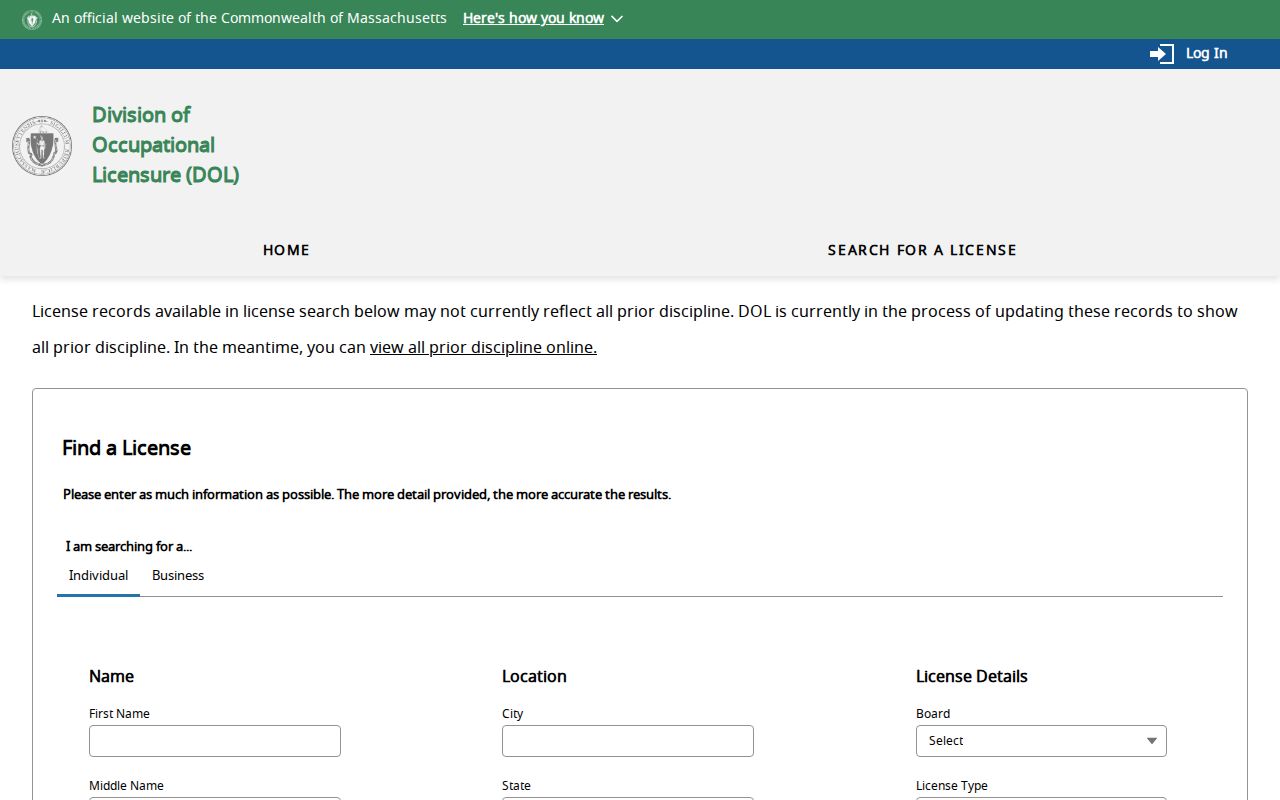
Assumed names, permits, health files, and local licensing records often live at the town level. If a Belmont record is not online, ask the Town Clerk or the responsible town office for it. That beats assuming a complete public database exists.
Belmont Unclaimed Property Checks
FindMassMoney is a state route for one narrow task. It tests an unclaimed-property question against a name and address. It does not prove anyone currently lives in Belmont. A claim can require proof of identity, ownership, or heir status. The state may also need time to review a submission. Save the name variation and address context you searched with. Then, if a possible match appears, follow the official claim process. The FindMassMoney search and claim instructions describe how the state handles it.
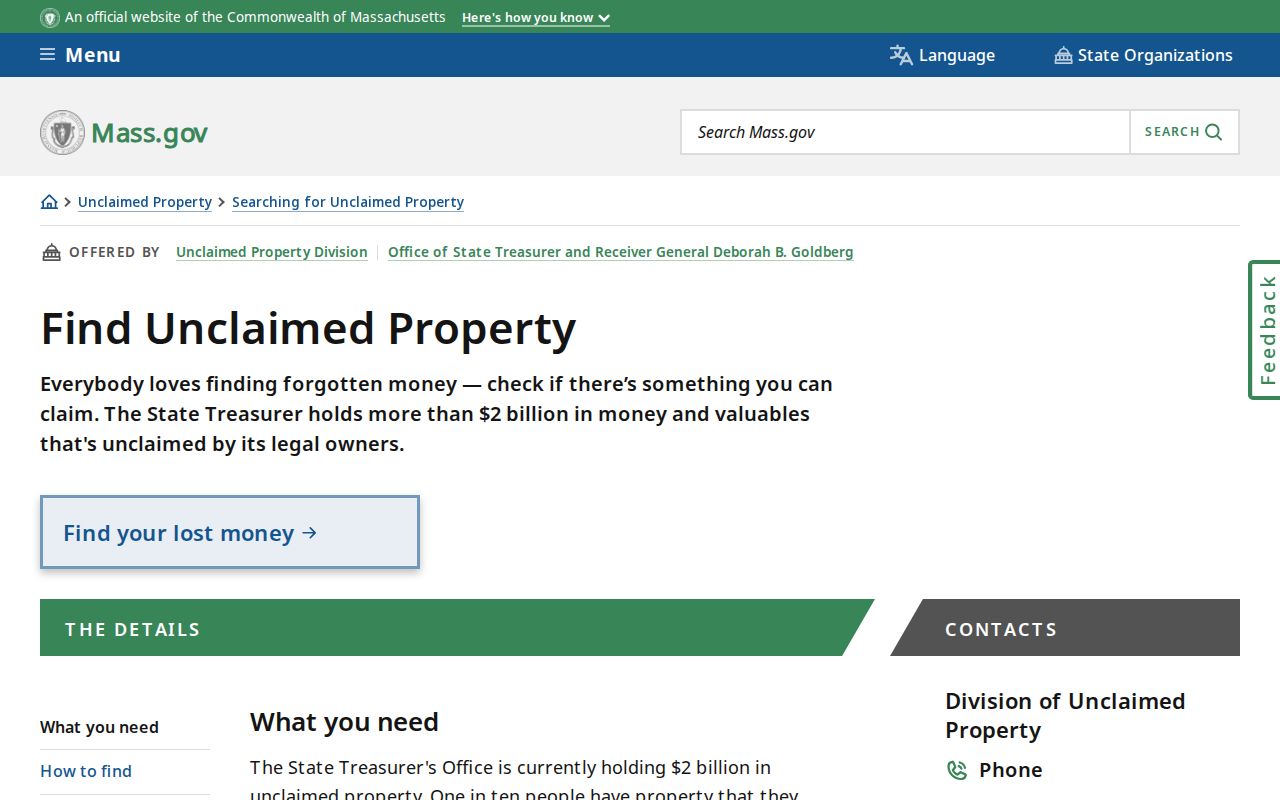
No private intermediary is needed to search Massachusetts unclaimed-property records. If one demands upfront payment, treat that as a warning sign.
Belmont Records Request Routes
A Belmont portal may lack the record you need. Send the request to the custodian instead. Do not widen the search with guesses. Belmont accepts reasonably described public-record requests in person, by mail, fax, email, or online. The Records Access Officer usually responds within 10 business days. A denial must identify exemptions and appeal rights. Custodians do not create new records or answer research questions. A reasonably described electronic extract can still be requested.
Paper production follows the Massachusetts Public Records Law framework. Black-and-white copies cost five cents per page. A municipality over 20,000 people may charge labor after the first two hours. That labor charge is capped at $25 per hour. The strongest Belmont request names the record type, date range, address or case reference, desired format, and whether an electronic copy works. Court files, older deeds, permit history, and restricted vital records may need their own counter or clerk process. The Belmont NextRequest portal is the town's online request channel.
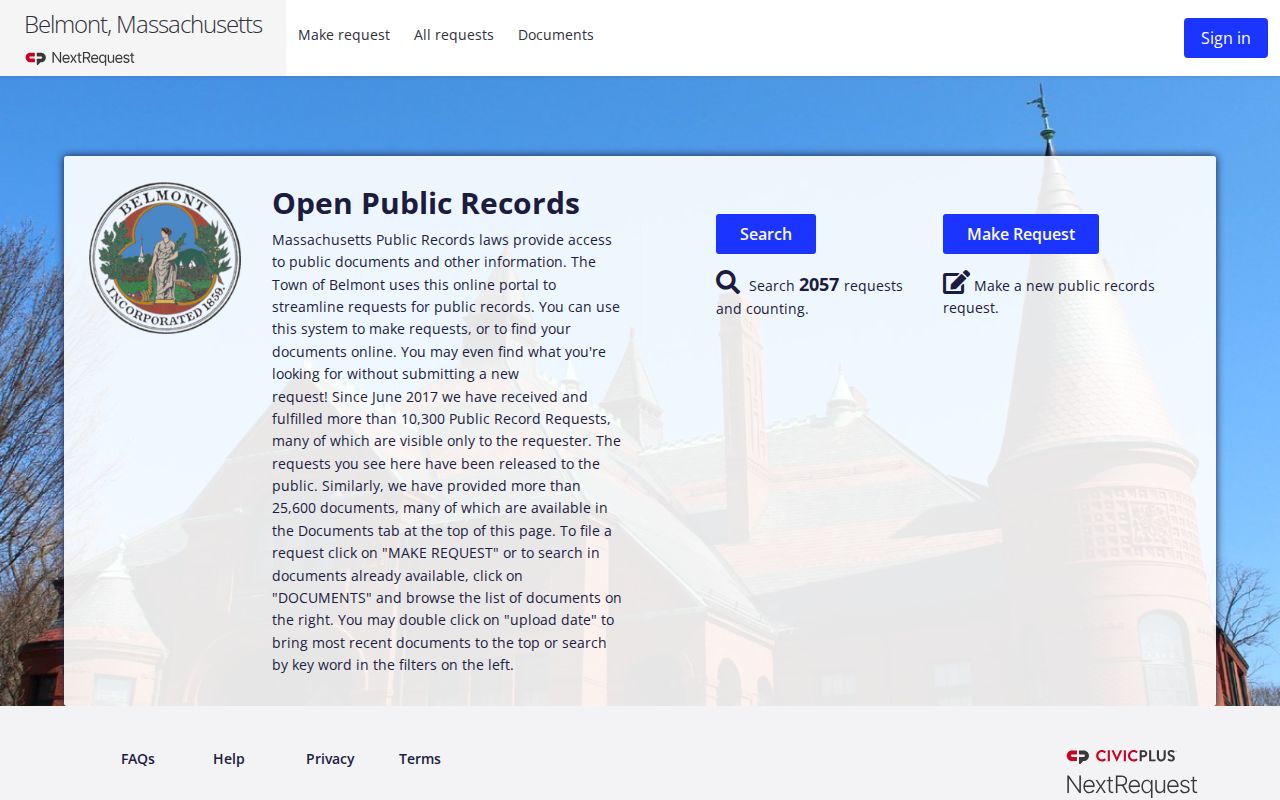
Describe the record with enough detail for staff to locate it. Keep the response, with its date and any stated exemption or appeal information.
Belmont Confidential Record Limits
Public access has firm boundaries. The Massachusetts Address Confidentiality Program, under M.G.L. c.9A and 950 CMR 130.00, gives eligible participants a substitute legal and mailing address. Confidential voter registration under M.G.L. c.51 §51A keeps a protected voter off the ordinary public list. Courts can seal or impound material, and vital records can require eligibility before release. Public voter information also excludes phone numbers, email addresses, permanent-absentee status, confidential-voter data, and other protected fields. A missing result may simply reflect a protection or custody limit. It does not mean the person or event never existed.
Never stretch a property owner, deed party, voter result, permit applicant, directory entry, or business filing into a claim about everyone at an address. Keep each record in its stated context. When a correction or access restriction is needed, ask the custodian directly.
Belmont Vital Record Preservation
Belmont's original vital records have sat with the Town Clerk since the town's 1859 incorporation. The Community Preservation Committee's FY2025 report documents the "Preserving Original Vital Records" project, begun in FY2013. That project conserves and digitizes those originals. This work matters for family-history research. An archival original, an online index, and a certified current copy each serve a different purpose. A digitized index can point you to a volume and page. It cannot replace the custodian's certificate rules or the original's evidentiary context.
For people who lived in the area before Belmont became a separate town, earlier sources may hold the relevant evidence. Predecessor-town, church, county, directory, and census records are all worth checking. Preserve the exact town name and date found in a record. Avoid silently converting an earlier place into Belmont.
Belmont Record Scam Alerts
Knowing the right channel is half the battle. The Registry of Deeds cautions owners about outfits charging a steep fee. The fee is for a deed copy you can get free. The official online index already lets anyone search, view, print, and download records. It costs nothing. A second safeguard is the Registry's Consumer Notification Service. Subscribe, and you get an alert whenever a new instrument is recorded against your property. A surprise notice is a cue to act, not a verdict. Verify the book, page, document, and property details directly with the Registry. Do that before assuming anything improper happened.
Belmont Police have passed along an FBI advisory about fraudulent permit-fee emails as well. Inspect the sender's address for a real government domain. Any permit question should go through Belmont's official Planning and Building contact. Skip payment links in an email. For unclaimed property, skip the middlemen and search the state database yourself. Preserve suspicious messages, URLs, payment demands, and screenshots. They matter when you file a report with the right custodian or with law enforcement.